
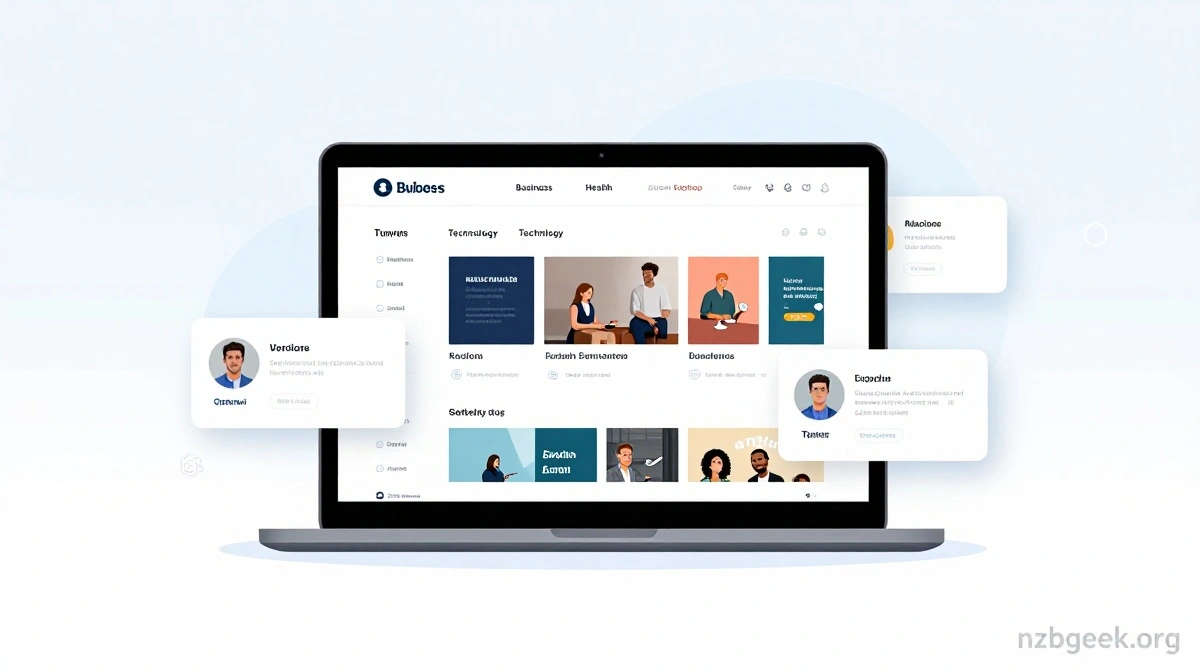
You’ve probably landed on a Yonopress article without even realizing it. Maybe you searched for a quick finance tip, a health update, or a business strategy, and the result that actually helped you came from this platform. That’s not an accident. Yonopress has quietly become one of the more reliable multi-niche content hubs operating in 2026, attracting readers who want straightforward, well-organized information without being forced to sign up, log in, or wade through endless paywalls. This guide breaks down exactly what Yonopress is, how it operates, and why it’s worth your time.
What Exactly Is Yonopress and Why Does It Exist
Yonopress is a free, multi-niche digital media platform that publishes structured articles across a wide range of subjects including business, finance, technology, health, education, travel, lifestyle, and entertainment. It operates across several domains, with yonopress.com and yonopress.net serving as its primary online addresses.
The platform’s tagline, “Fresh Content. Smart Thinking,” reflects its core mission of delivering timely, readable, and genuinely useful content to everyday readers. Unlike niche websites that go deep into one subject area, Yonopress takes a horizontal approach, spreading its coverage wide so that a single reader can find articles on completely different topics in one visit.
It was designed for people who are curious about many things, not just one, and that philosophy drives every editorial decision the platform makes.
How the Yonopress Platform Actually Works
Using Yonopress requires absolutely no technical setup. There is no account system, no dashboard, no subscription tier, and no download. You visit the site, pick a topic category, and start reading. Articles are organized into clearly labeled sections so navigation stays intuitive even for first-time visitors.
The platform is ad-supported, meaning all content remains free to access permanently. Behind the scenes, Yonopress relies on a team of writers and named contributors who research and produce content across its many categories.
Each article goes through editorial review before publishing to maintain a baseline of accuracy and readability. The structure is intentionally clean so that mobile users, who make up a large portion of the readership, can browse without friction or slowdowns affecting their experience.
The Content Categories That Make Yonopress Useful
One of the reasons Yonopress has built a loyal readership is the sheer range of its content categories. Business readers can find market trend analysis, startup coverage, and economic insights that are written in plain language rather than financial jargon.
Students and self-learners gravitate toward the education section, which offers study guidance and informational explainers on academic subjects at no cost. The finance category covers practical topics like budgeting, tax basics, and loan comparisons, making it accessible to people who don’t have accounting backgrounds. Health content provides wellness guidance, preventive care tips, and general medical awareness.
Technology coverage keeps readers current on digital tools, gadget releases, and platform developments. Travel articles offer destination breakdowns and planning ideas. Each category serves a different type of reader, but they all share the same commitment to being clear and helpful.
Who Benefits Most From Reading Yonopress Content
Yonopress was built with a specific type of reader in mind: someone who is genuinely curious but short on time. If you spend your mornings scanning business headlines and your evenings looking up health tips or tech reviews, Yonopress consolidates that entire browsing session into one platform.
Freelancers and small business owners use it to stay informed about industry shifts without paying for multiple subscriptions. Students use it as a starting point for research because articles are written clearly and topics are explained from the ground up.
Casual readers who simply want to stay generally informed find it far less overwhelming than traditional news sites, which often prioritize speed and volume over actual clarity. Yonopress positions itself as a middle ground between shallow clickbait content and dense, expert-only publications.
What Sets Yonopress Apart From Other Content Platforms
Several things distinguish Yonopress from the dozens of similar platforms competing for reader attention in 2026. The first is its genuinely barrier-free access model. Many platforms advertise themselves as free but quietly limit article views or push premium tiers after a few reads.
Yonopress does not do that. Second, its articles tend to avoid the filler language and vague advice that make so many blog-style sites frustrating to read. The editorial focus is on giving readers something they can actually use within the article itself.
Third, Yonopress is designed to be SEO-friendly without compromising readability, which means articles are discoverable through search while still reading naturally. That balance is harder to achieve than it sounds, and platforms that get it right tend to build trust faster with both readers and search engines over time.
The Role of Quality Control in Yonopress Publishing
A platform covering dozens of subject areas faces an obvious challenge: maintaining consistent quality across very different types of content. Yonopress addresses this through a contributor model that includes both staff writers and named external contributors who bring subject-specific knowledge to their respective categories.
Articles are reviewed before they go live, with accuracy and clarity serving as the two primary editorial standards. The platform focuses on well-researched pieces rather than reactive content published purely to capitalize on trending search terms.
This doesn’t mean Yonopress avoids timely topics — it does cover current events and recent developments — but it approaches them with enough context that the content stays useful even after the news cycle moves on. That longer shelf-life makes its articles more valuable to both readers and the platform’s overall search performance.
How Yonopress Handles the User Reading Experience
Reader experience is not an afterthought at Yonopress. The site uses a clean layout that reduces visual clutter, making it easier to focus on the text rather than being distracted by aggressive advertising placements or pop-up interruptions.
Navigation is structured so that finding a related article on a different topic takes seconds, not multiple clicks through confusing menus. Articles are written in short paragraphs with clear headers so readers can scan before committing to a full read.
Mobile optimization is built into the platform’s design rather than treated as a secondary consideration, which matters enormously given that more than half of all online reading now happens on smartphones. Yonopress also keeps page loading fast, which directly affects both user satisfaction and search engine ranking in an environment where speed is treated as a quality signal.
Common Misconceptions People Have About Yonopress
Because Yonopress covers so many topics, some readers assume it must sacrifice depth for breadth or that its content is automatically less reliable than a specialized site. That assumption is worth questioning. Multi-niche platforms can and do produce reliable, well-researched content — the key is editorial discipline, not topic focus.
Another misconception is that free, ad-supported platforms must be low quality. Advertising has funded serious journalism for over a century, and Yonopress’s model is not fundamentally different from that tradition.
Some readers also assume the platform is new and unproven, when in fact it has been building its content library and readership steadily over the past few years. Checking its output across categories reveals a consistent tone and structure that reflects genuine editorial standards rather than rushed, quantity-driven publishing.
Why Yonopress Continues to Grow in 2026
The growth Yonopress is experiencing in 2026 is not hard to explain once you understand what modern readers actually want. People are more information-hungry than ever, but they’re also more impatient with platforms that waste their time.
They want content that’s easy to find, easy to read, and genuinely informative — and they want it without unnecessary friction. Yonopress delivers on all three of those expectations, which is why its readership has expanded steadily across demographics ranging from college students to working professionals to retirees curious about technology or health.
Search engines have also rewarded the platform’s commitment to structured, accessible content, making its articles more discoverable over time. That visibility compounds, bringing new readers who then return because the experience justifies the visit.
Conclusion: Is Yonopress Worth Your Time as a Reader
After researching Yonopress thoroughly, the honest answer is yes — it’s worth bookmarking if you value variety, clarity, and free access to well-organized content. The platform won’t replace a specialized industry publication if you need deep expert analysis in a single field.
But for the majority of everyday information needs, it covers an impressive range of topics with more editorial care than most comparable platforms. Yonopress is particularly strong for readers who don’t want to manage multiple subscriptions just to stay generally informed.
Its clean interface, consistent article quality, and genuinely barrier-free model make it one of the more practical content platforms available right now. If you haven’t explored it beyond one article, spending twenty minutes browsing its categories will give you a much clearer sense of what it can offer you.